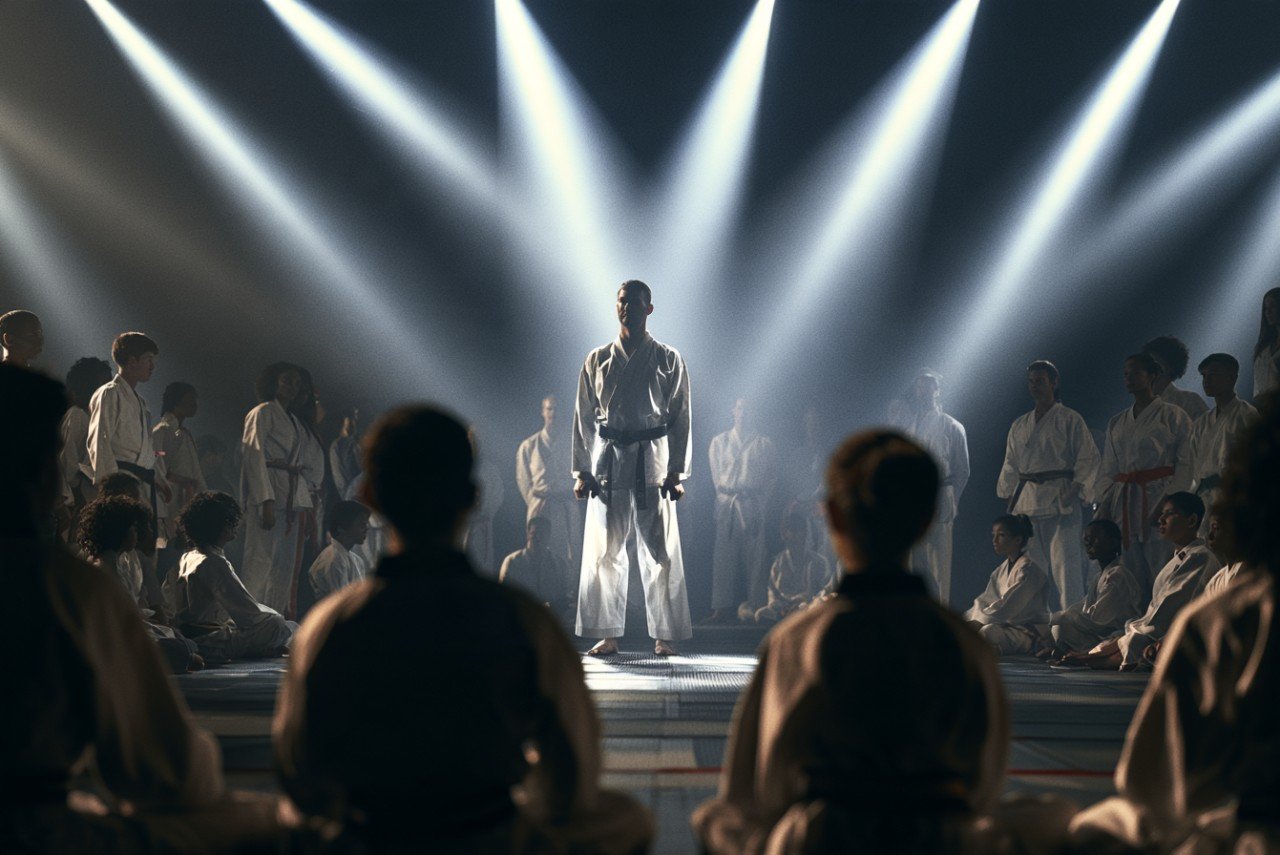
The image in this post is an image from Midjourney. We have a Midjourney license agreement to use images and design tools from the Midjourney site.
Congratulations! You are the leader! Heads up: now that you are the leader, all eyes are on you. Your team will notice the good, the bad, and the ugly.
I was voted in as the new Vice Commander for Delaware American Legion District Two. I was new to this position and prepared for my first presentation. The first meeting and presentation went well.
After the meeting, a Vietnam veteran approached me at the front of the room. He welcomed me to the group and shared a kind message. Immediately after his welcome, he leaned in close and quietly, so no one else could hear, shared that I had made a mistake in one of the procedural actions at the start of the meeting. I was immediately appreciative. I know people don't always share problems they see with their leader.
All Eyes Are on You
When you become the leader, a lot of things will change. People will look at you differently. You are now in the spotlight. When you walk into a room, people will watch you. What is the leader doing? How are they dressed? How do they respond to questions? Do they look confident? Do they look like they know what's going on?
My advice: act like a leader. Be aware that people will view you differently. What you do in your role as a leader is more important than the title.
It's also a reality that your team may not share directly with you what they are observing or their perspective.
When a team member does share feedback, be appreciative. Hopefully, the feedback will come to you privately, but don't count on it. I've been in large meetings and received negative feedback in those public settings. My advice as a leader is to stay calm and not get defensive. The feedback may be something you need to hear, and it can make you a better leader and help your team.
Perspective Matters
I had one of my college teachers once say, "Facts mean nothing; perspectives are everything. This is good to remember in our leadership positions. I encountered this situation during my career.
When I first became a high school principal, I was told the main discipline problem in the building was in the main office area between classes. In the past, chaos erupted right there.
When I observed the area, I agreed. I spent the majority of my time on hallway duty in that area of the school. I thought I was doing a good job.
I was caught off guard at a staff meeting when a teacher shared openly, "We never see you on hallway duty!" The teacher who shared had no idea I was spending my time in the high-traffic area. I immediately adjusted my hallway monitoring activities. I knew it was important to be seen everywhere, not just in one area of the building. All team members wanted to see me occasionally. Being in the hallway all the time didn't match the perception that the principal doesn't help monitor students during class changes.
When you become a leader, you must remember you will be observed at all times. You're in the spotlight, but that awareness is a good thing. Lead by example. Be appreciative when you receive feedback, and make adjustments when it will help you become a better leader. Perspectives matter and may carry more weight than facts in your team members' minds. Great leaders have awareness and act with purpose.
Martial Arts Perspective:
At Delaware Hapkido Martial Arts Academy, we are focused on teaching self-defense skills. However, when you visit our training facility, you will immediately notice leaders at all levels and hear us talk about leadership.
Highly effective martial arts instructors know that it's important to build leaders. It's another example of how martial arts learning can carry into the real world.
Questions:
What information do you have to support the statement, "all eyes are on the leader?"
Facts mean nothing; perspectives are everything. What evidence do you have to support this comment?
Knowing that people will sometimes criticize your leadership, how will you adapt to negative feedback?
Think of a leader you know. What do you observe and hear when you are around them?
