Are You Really Learning? The Hidden Cost of Easy Answers
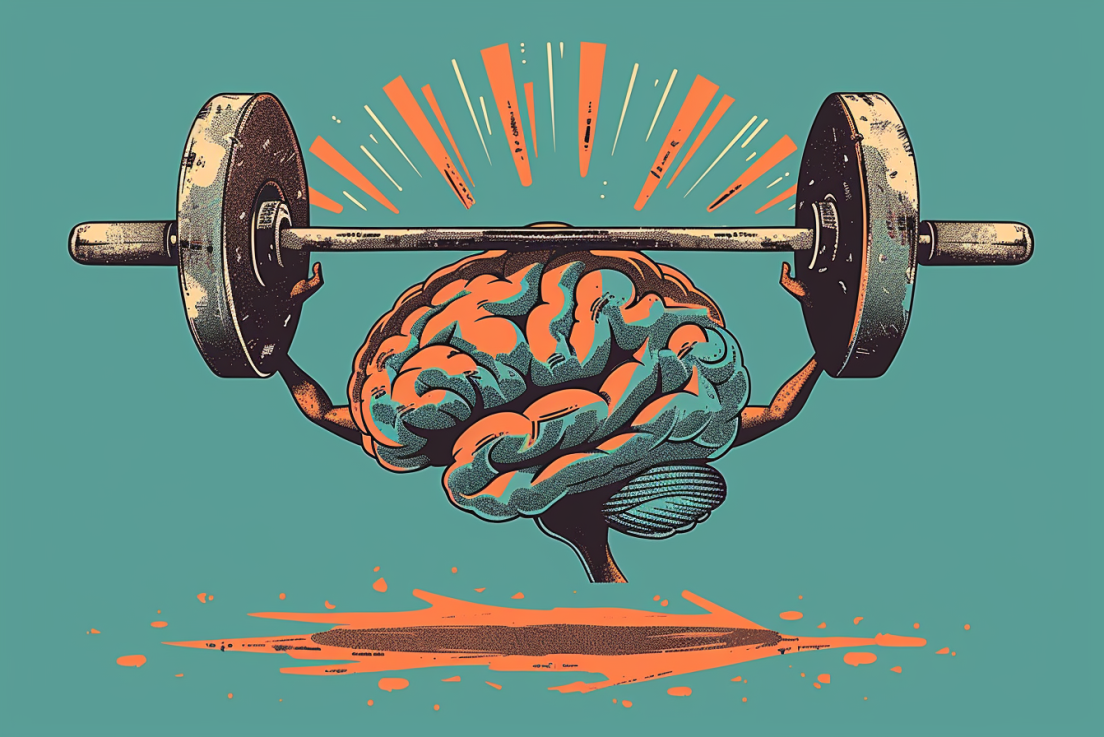
The image in this post is an image from Midjourney. We have a Midjourney license agreement to use images and design tools from the Midjourney site.
How do you learn? Taking shortcuts makes it very challenging to reach a deep understanding. If you're going for understanding, intentional effort will get you there. Intentional effort looks much different than shortcuts or the easy way.
Over the last year, every few months, I have had to take a trip that required me to travel through a neighboring city. I took the trip to visit family. By now, you would think I would know all of the off-ramps and roads.
For directions through the maze of roads, I have been relying on technology. That technology is extremely easy to use and shows me exactly where to go. It scans the roads and, using live user feedback, chooses the best route.
The best route is always changing. Each time I go, I expect the technology to take me on a new route because of current traffic patterns, road construction, or other delays.
What would happen if I turned off the technology? I could eventually find my way, but I would make mistakes along the way. Unfortunately, I've relied on technology to the point that I have not clearly established in my head the best route. I haven't yet truly learned my way around the city. Why?
Years ago, before GPS technology, this feeling of uncertainty would not have been present. I had to manually find my way and think more critically about a trip. Do you remember that old, reliable hardcopy map? That's what I used.
A national publisher created a book of maps, and I used it. Although there were freestanding folded maps in my glove box, I enjoyed using the book of maps to find my way.
The maps and the book's cover were rugged-looking from use and abuse. The cover and pages were curled from use and being stepped on when not in use. Occasionally, a well-used section had pages that had ripped. Flipping through a few more pages, you might find some stains from the coffee spill - better on the maps than on my car seats.
Even with the scars of use, the maps within the book served a critical purpose. Each map showed the state's overall layout and included diagrams of the state's largest cities.
Back when I used a map, I found that after a few trips, I no longer needed it. I knew the way.
What was different? My brain had to work when I was using a map. When I use technology, I am just following an on-screen image that shows me the way and listening to a voice, from the technology, that tells me what to do.
If this "no- or low-quality learning" is happening to me, at my age, what is happening to the brains of young people?
Our young people know how to use the most relevant and new technology apps to navigate life, but are they engaging in "old school learning strategies" for deep understanding?
Youth mentors, parents, and teachers must challenge young people to go beyond the easy and take on challenging learning opportunities. For some youth, this might be stressful. It's not always fun not to have the answer right in front of you. Technology delivers instant answers without thinking.
When working with young people, engage them with critical thinking activities. Challenge them to problem solve. Here are a few ideas:
As you develop activities, ask yourself, " Is this engaging or passive?" If it's too easy, will your mentee actually learn?
Emphasize that if they don't use it ─ their brain ─ they're going to lose it; and in some cases, if they don't use it, they'll never gain anything. They need to work their brains just like a person uses their muscles in a workout. We need to create brain, neurological pathways and connections so that true learning has taken place. Coach them to take a challenging approach to learning, and explain why it is important and how it will benefit them.
Rigorous learning does not have to be boring. Engage young people in real-world applications and consider their interests. Without developing real-world learning opportunities, some young people might not enjoy the experience.
At the end of a learning experience, there's nothing like hearing from young people that they thoroughly understand a challenging concept and that the learning journey was fun.
The journey of learning is not always easy. We must teach young people that the path to true understanding will sometimes require significant effort and thought. Thinking can be a challenge; acknowledge this, but teach them that a challenging journey will produce great results. Inspire them and get them to take the first step.
Martial Arts Perspective: At Delaware Hapkido, we are in the perfect environment to engage the brain. Some people think the key to proficiency is watching a video of a self-defense technique. This does not work. Proficiency requires perfect practice, which is what our students experience.
Mentoring Perspective: All youth mentoring requires planning. When planning, include engaging learning experiences. Your mentees will benefit from your efforts.
Questions:
Share an experience where you became highly knowledgeable. What did the learning experience look like?
How do you learn? For example, do you learn best through auditory, visual, tactile/kinesthetic, or a combination of those? There may even be other ways of learning that work best for you. No matter the learning style, you should strive to create opportunities for learning engagement ─ avoid passive learning. How can you use knowledge of your learning style to improve your learning experiences?
